
Catch up with our 2025/2026 Interns
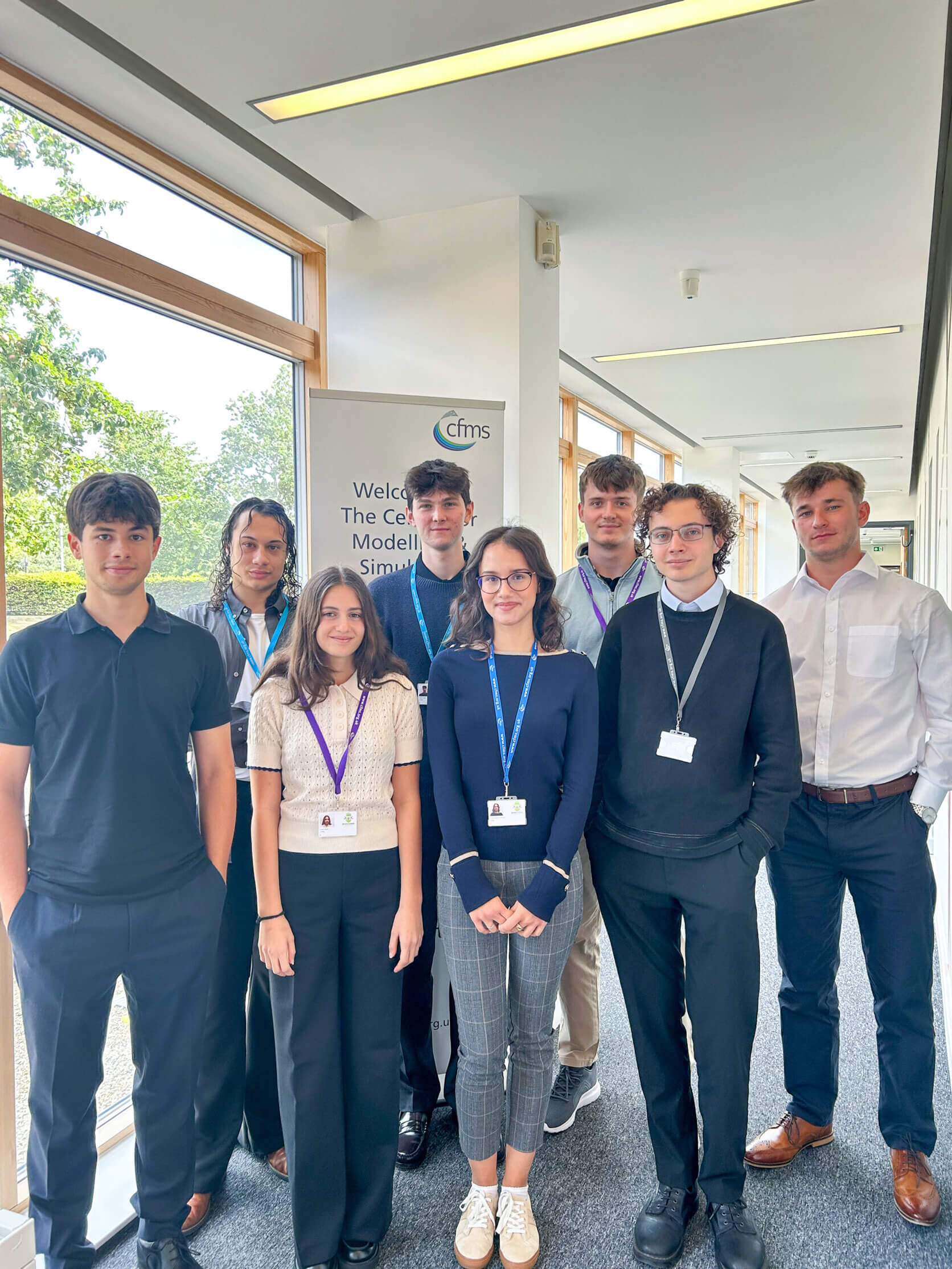
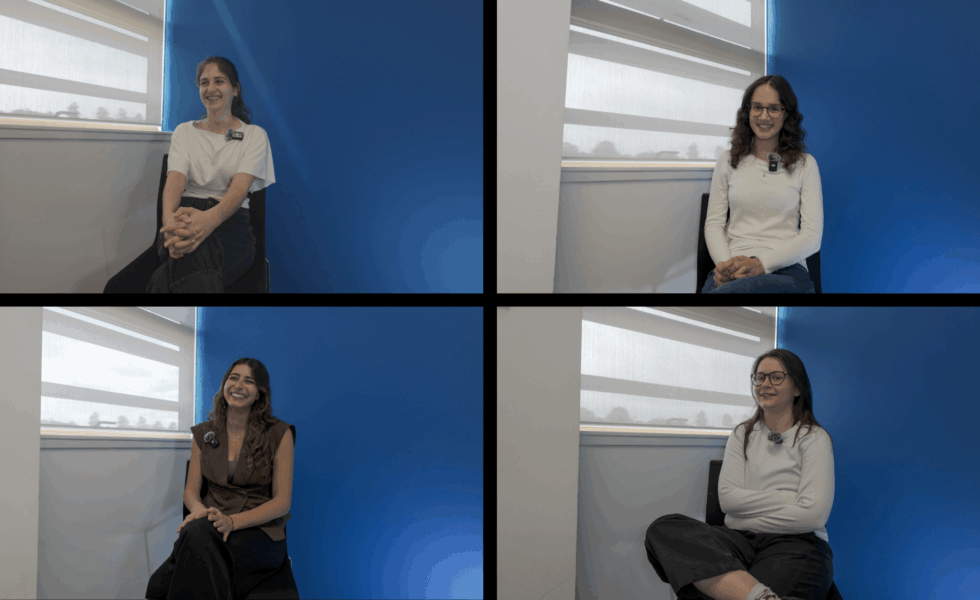
Our 2025/2026 interns have been with us for three months already! We caught up with them to ask how they’ve settled into life at CFMS, what they’ve found surprising about their engineering internship and what they’re looking forward to learning in 2026.
Luke, Aerospace Engineering Student at the University of Bath
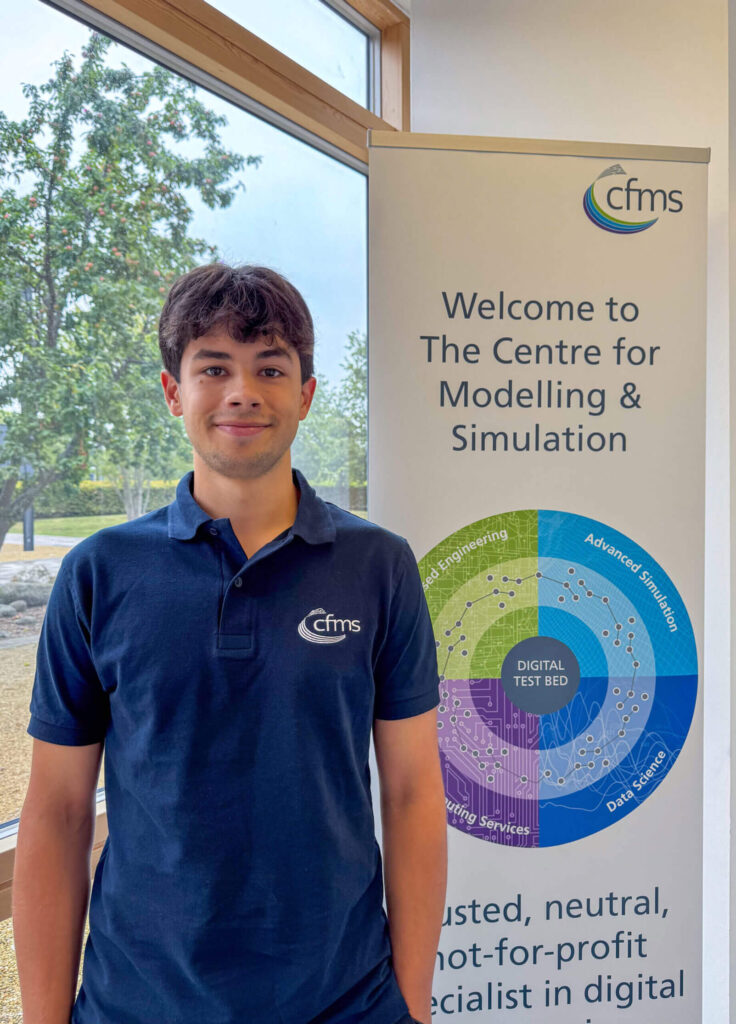
What project are you currently working on?
Since my training project, I’ve been working on CoSInC (Composite Smart Industrial Control), an ATI project led by Airbus. Within this, I’ve been developing a factory simulation and optimisation tool, and more recently, parallelising this model to enable it to run across multiple processors simultaneously and reduce runtime.
What’s the best skill you’ve learnt so far?
I would say the best skill I’ve learnt so far is the ability to challenge an existing method or solution, and consider new or alternative ideas to tackle the problem differently in a more effective or efficient way. The default option is not necessarily the best!
What are you most looking forward to learning in 2026?
I’m most excited to learn how to use software for FEA and CFD, which links more to the physics side of model-based engineering as opposed to the programming side, and will therefore nicely align with the rest of my degree.
What is one thing that has surprised you since being here?
Since starting at CFMS, my most surprising realisation has been the versatility of and ubiquitous demand for model-based solutions to industrial problems. Almost any industrial process can be optimised in some way, and the range of projects at CFMS has opened my eyes to this.
Hector, Aerospace Engineering Student at the University of Bristol
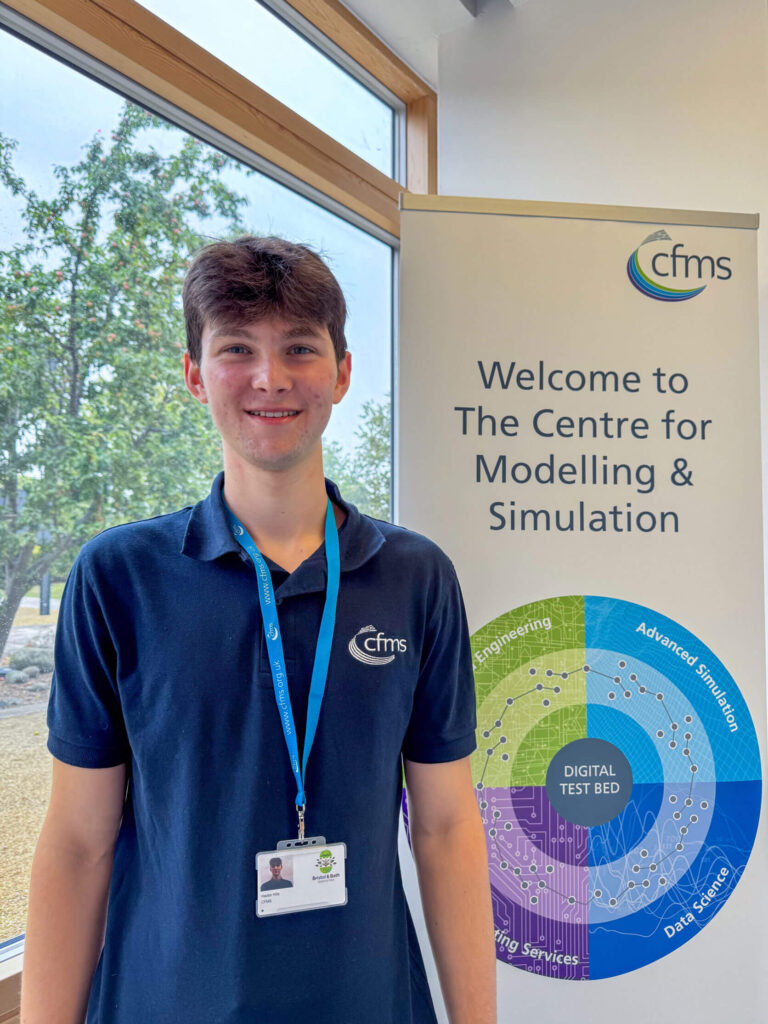
What project are you currently working on?
I am currently developing a porous flow model for the Composite Smart Industrial Control (CoSInC) project. I am using the finite element library MFEM to develop this from scratch, with the long-term goal of producing a model that accurately simulates the manufacture of a product through the infusion of resin into a carbon fibre structure.
What’s the best skill you’ve learnt so far?
I have greatly improved my coding skills in Python and C++, as well as my understanding of the finite element method. Being able to combine this knowledge to produce a custom multi-physics model feels incredibly rewarding.
What are you most looking forward to learning in 2026?
I’m looking forward to developing my presentation and communication skills; this is a key part of the industry that I realised I really enjoy, but still have a lot of room for improvement in. I have recently begun a proof-of-concept project for a client and am excited to present my results to them next year.
What is one thing that has surprised you since being here?
I am surprised by the breadth of knowledge and skills within the company. There is a wide range of really interesting people, each with their own specialisms, and it is impressive to see how everyone contributes to efficiently solving complex engineering problems.
Will, Aerospace Engineering Student at the University of Bath
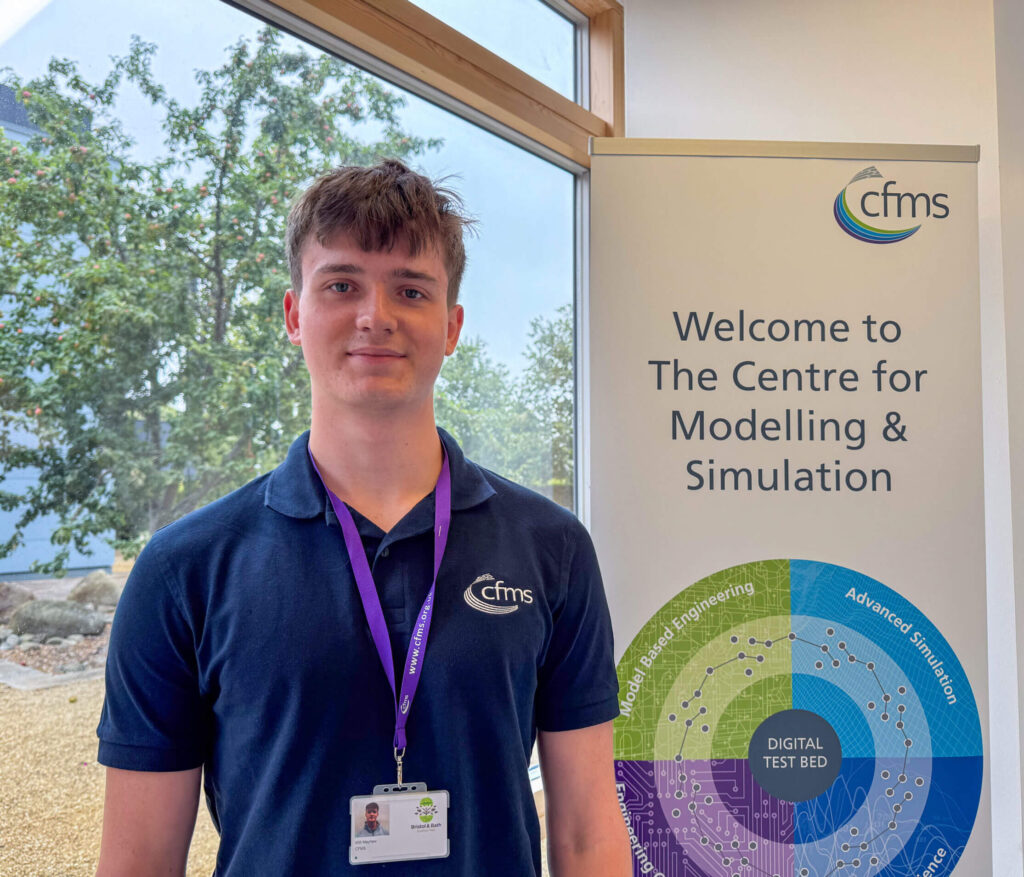
What project are you currently working on?
I’m currently working on the UKAEA Uncertainty Quantification project. My focus has been on creating a parameterised version of a Pincell used in tritium production in nuclear fusion. I’m now creating an automated pipeline where we can run this fusion model 1000s of times for varied parameter ranges.
What’s the best skill you’ve learnt so far?
Presenting information to large audiences in a way which is engaging and understandable at a high level. Also learning Pythin to a decent standard where I can code independently.
What are you most looking forward to learning in 2026?
I’m really looking forward to strengthening my programming abilities, possibly by learning some C++ and becoming comfortable running tasks on the cluster. This is so that I can contribute more independently and take on more complex problems.
What is one thing that has surprised you since being here?
One thing which was quite unexpected to me is how many meaningful and high-impact projects can be accomplished by such a small team. The competence and willingness to adapt by everyone is very impressive.
Erifyli, Mechanical Engineering Student at the University of Bath
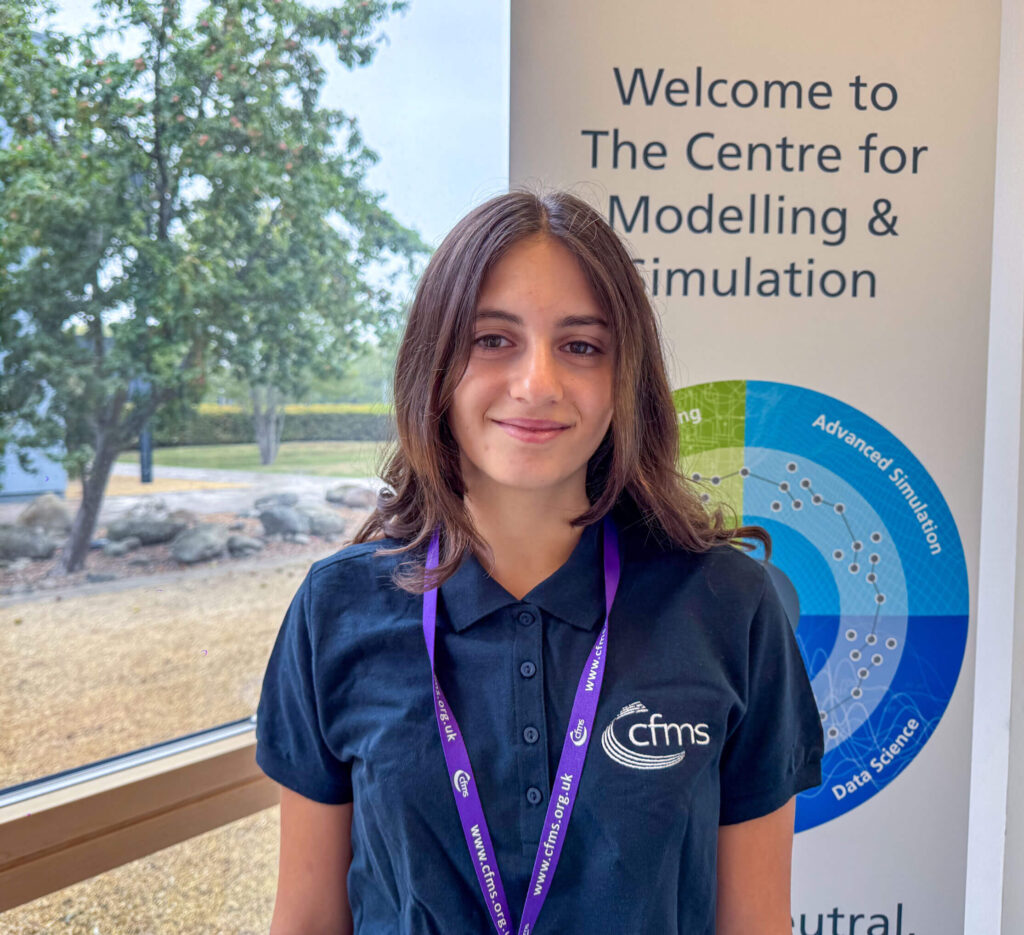
What project are you currently working on?
I am currently working on the Unaccounted for Gas project for National Gas. This project involves calculating unaccounted for gas in the national transmission network due to measurement uncertainties. My responsibilities on the project include developing various functionalities in Python to meet current needs.
What’s the best skill you’ve learnt so far?
The best skill I have learnt so far is how to develop robust and clean code that can pass review from other team members. Additionally, I have learnt how to do this collaboratively using GitLab.
What are you most looking forward to learning in 2026?
I’m looking forward to having a chance to work with multi-physics simulation software such as MOOSE and MFEM, which will be very useful for the rest of my time in university and onwards.
What is one thing that has surprised you since being here?
The thing that has surprised me most is that despite the company’s relative small size, CFMS has the capacity to deliver excellent results in complex projects across a variety of specialised, technical sectors.
Sophia, Aerospace Engineering Student at the University of Bristol
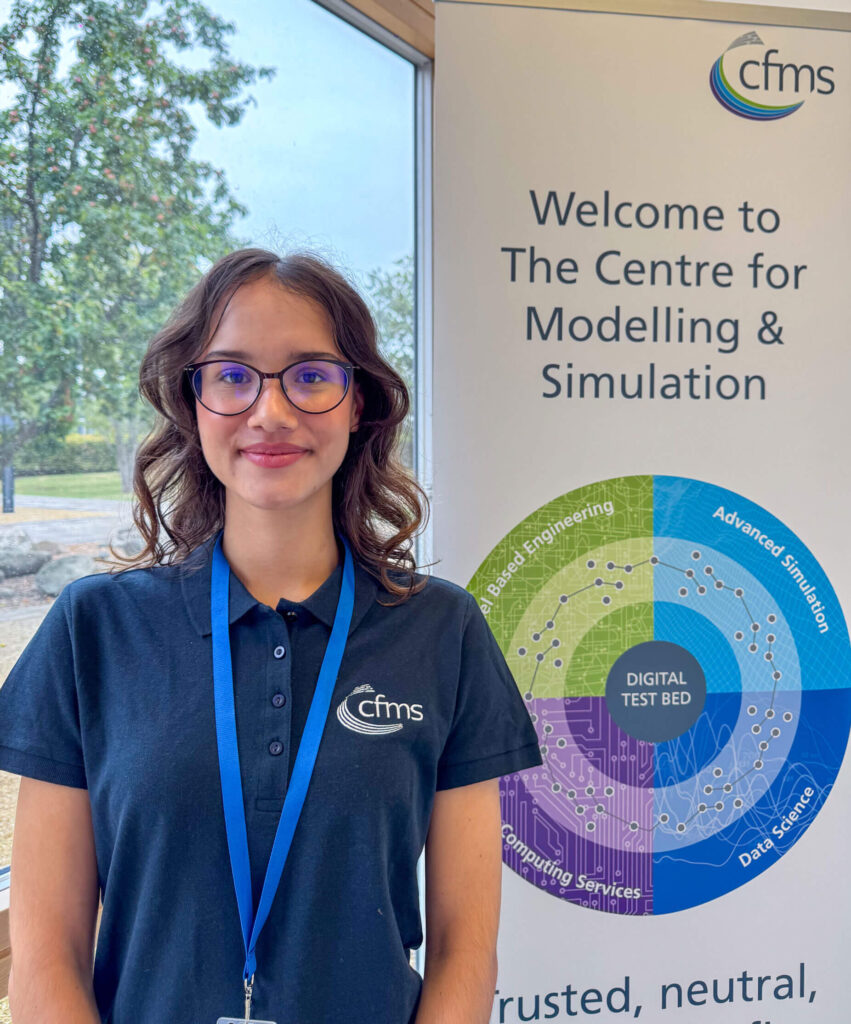
What project are you currently working on?
I’m currently working on UKAEA Uncertainty Quantification. This project aims to determine the sensitivity of the tritium breeding process to various inputs. My involvement so far has concentrated on tritium production and transport analysis in fusion systems.
What’s the best skill you’ve learnt so far?
One of the most essential skills I have acquired is expertise in client communication. Through regular meetings and progress updates on the UKAEA UQ project, I’ve become much more confident in explaining complex technical ideas in a clear and concise way. I’ve also learnt how to tailor discussions depending on who I’m speaking to. This has helped me engage more proactively in conversations and made it easier to collaborate with both internal teams and external partners.
What are you most looking forward to learning in 2026?
In 2026, I’m looking forward to deepening my understanding of uncertainty quantification techniques and exploring how they can be applied across different simulation environments. I’m excited to broaden that knowledge and see how similar methods can strengthen modelling processes within CFMS.
What is one thing that has surprised you since being here?
The thing that has surprised me the most since being at CFMS is how collaborative the environment is. I wasn’t fully sure what to expect before starting, but I’ve been impressed by how willing everyone is to share their expertise and help each other solve problems. The openness across teams makes it easy to ask questions, learn quickly and see how different strands of work coome together to support larger projects.
Tom, Computer Science Student at the University of Bath
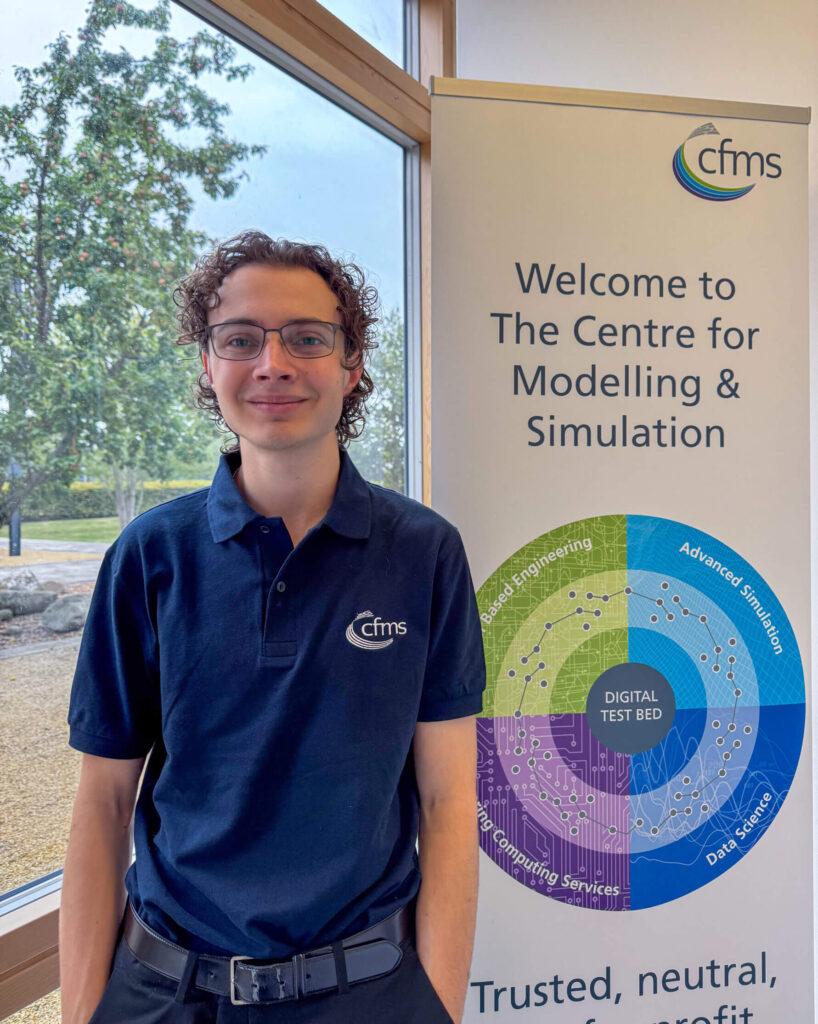
What project are you currently working on?
I’m currently working on the Composite Smart Industrial Control project, adapting existing factory and supply chain simulation technology to leverage parallel execution on CFMS’s high performance compute system. Working with another intern, I have helped to develop a proof of concept which shows how parallelisation can greatly improve simulation performance for large supply chains.
What’s the best skill you’ve learnt so far?
Working at CFMS has helped me develop my communication skills by offering experience presenting both high level and technical information to stakeholders in roles ranging from co-workers to members of the board. These opportunities have really taught me the importance of presenting information clearly and concisely.
What are you most looking forward to learning in 2026?
In 2026, I will be working on connecting different components of the CoSInC project. This will involve learning about a range of new technologies and approaches used by these components, such as using MOOSE and GMesh to run RVE simulations.
What is one thing that has surprised you since being here?
What has surprised me the most has been the range of different sectors that CFMS works in, as well as the way in which approaches are transferred from one project to anpother through knowledge sharing and internal documentation. There is a real team spirit at CFMS, and everyone is encourages to explore within and beyond the projects they are working on and to share what they have learnt.
Will, Computer Science Student at Cardiff University
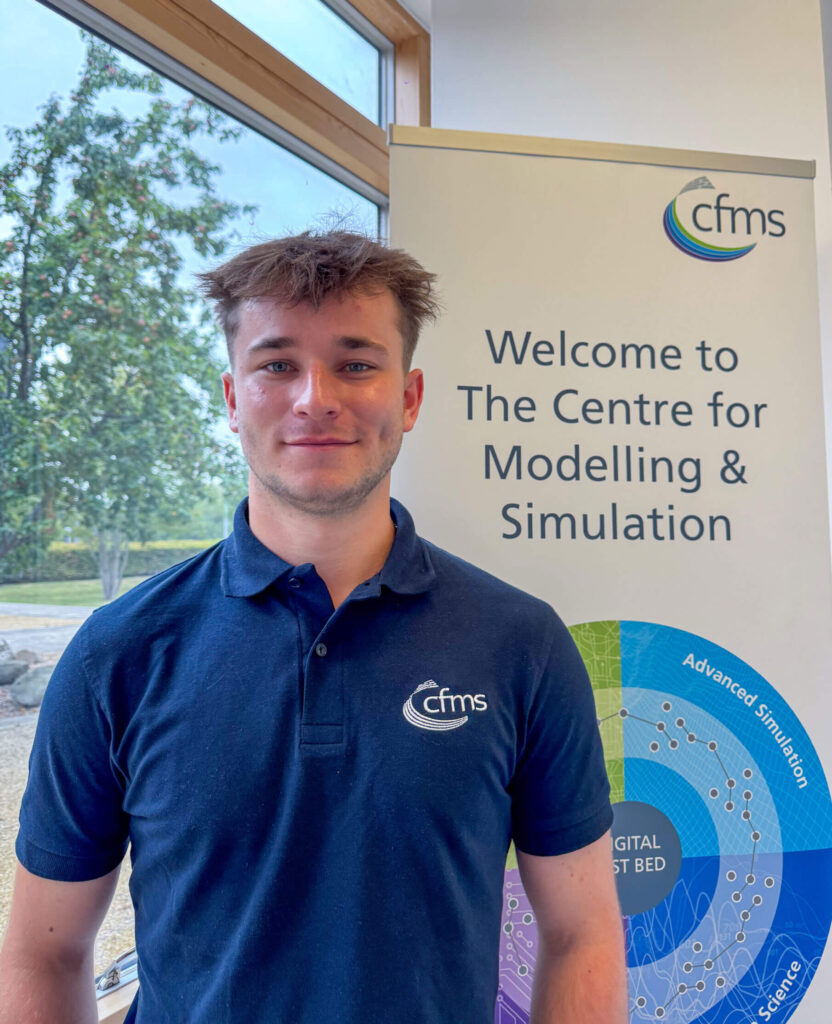
What project are you currently working on?
I’m currently working on the ISLAA (Implementation of Sustainable Large Additive for Aerospace) project. My focus is on the development and validation of our thermomechanical distortion simulation tool used to predict distortion in large complex aerostructures made using LMDw (Laser Metal Deposition by Wire).
What’s the best skill you’ve learnt so far?
While working on the ISLAA project, I have gained experience using the MOOSE framework to build and run thermomechanical finite element simulations. This has given me a better understanding of complex engineering concepts and the mathematical principles behind them.
What are you most looking forward to learning in 2026?
In 2026, I’m looking forward to the opportunity to work more closely with the HPC and write high-performance code, improving my knowledge of parallel computing and optimisation.
What is one thing that has surprised you since being here?
What surprised me the most was how quickly we jumped into real work. I had expected mostly training and induction activities for the first two weeks, but by the end of day one, we were already starting our first project, which was both exciting and challenging.
Gabriel, Maths and Physics Student at the University of Manchester
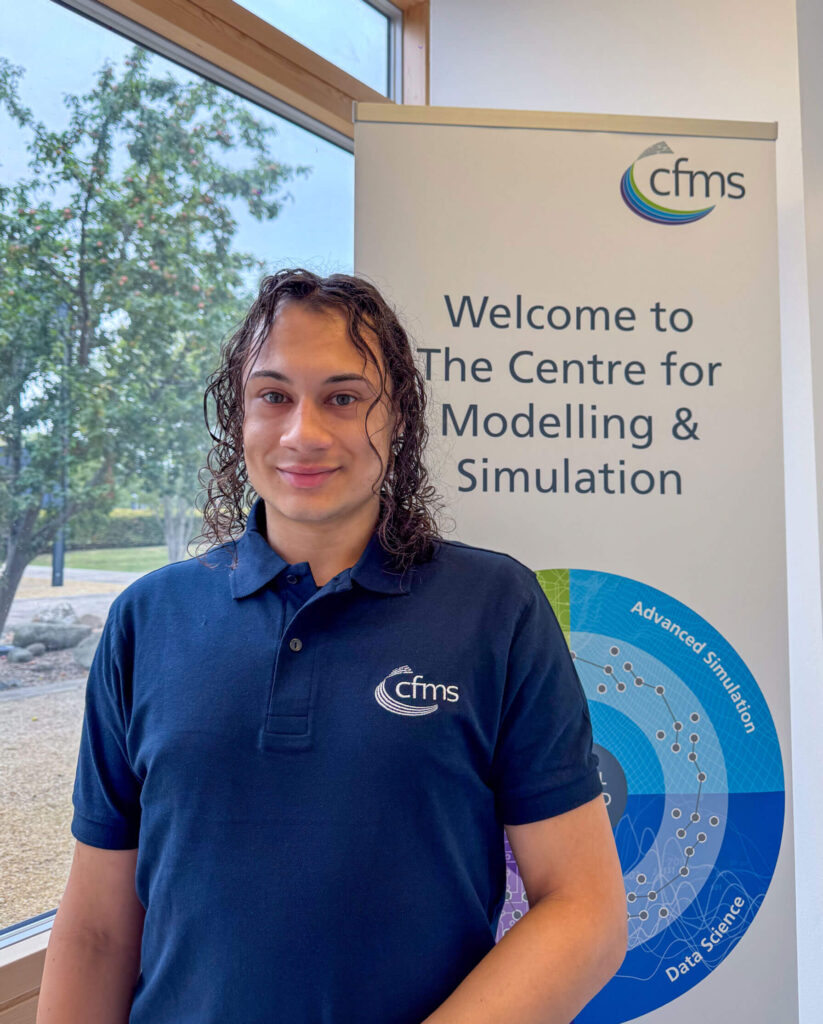
What project are you currently working on?
I’m working on ISLAA (Implementation of Sustainable Large Additive for Aerospace), simulating several stages of the laser metal deposition by wire process to better understand and predict the shape of printed parts. My focus is on simulating the molten pool of lead, attempting to overcome the tightly coupled physics and irregular domains with a simple and powerful cellular automata called Lattice Boltzmann.
What’s the best skill you’ve learnt so far?
Coding! With uni courses, I never felt I had day-to-day fluency in Python or C++. But after 3 months of daily practice, common syntax and patterns seem natural and I’m no longer checking the docs every other line. Plus, using docs has become so much easier!
What are you most looking forward to learning in 2026?
I’m looking forward to continuing to develop my presentation and communication skills. With regular team updates, I’m learning practical and concise presenting without it feeling like a contrived exercise. I’d also like to learn a program called GMesh for creating simulation meshes.
What is one thing that has surprised you since being here?
The range of knowledge here, even within just the engineering team. Coming from a physics background, we like to keep domains of study very separate. Here, solutions and techniques come from cutting-edge literature as easily as they do from entrenched industrial wisdom.