

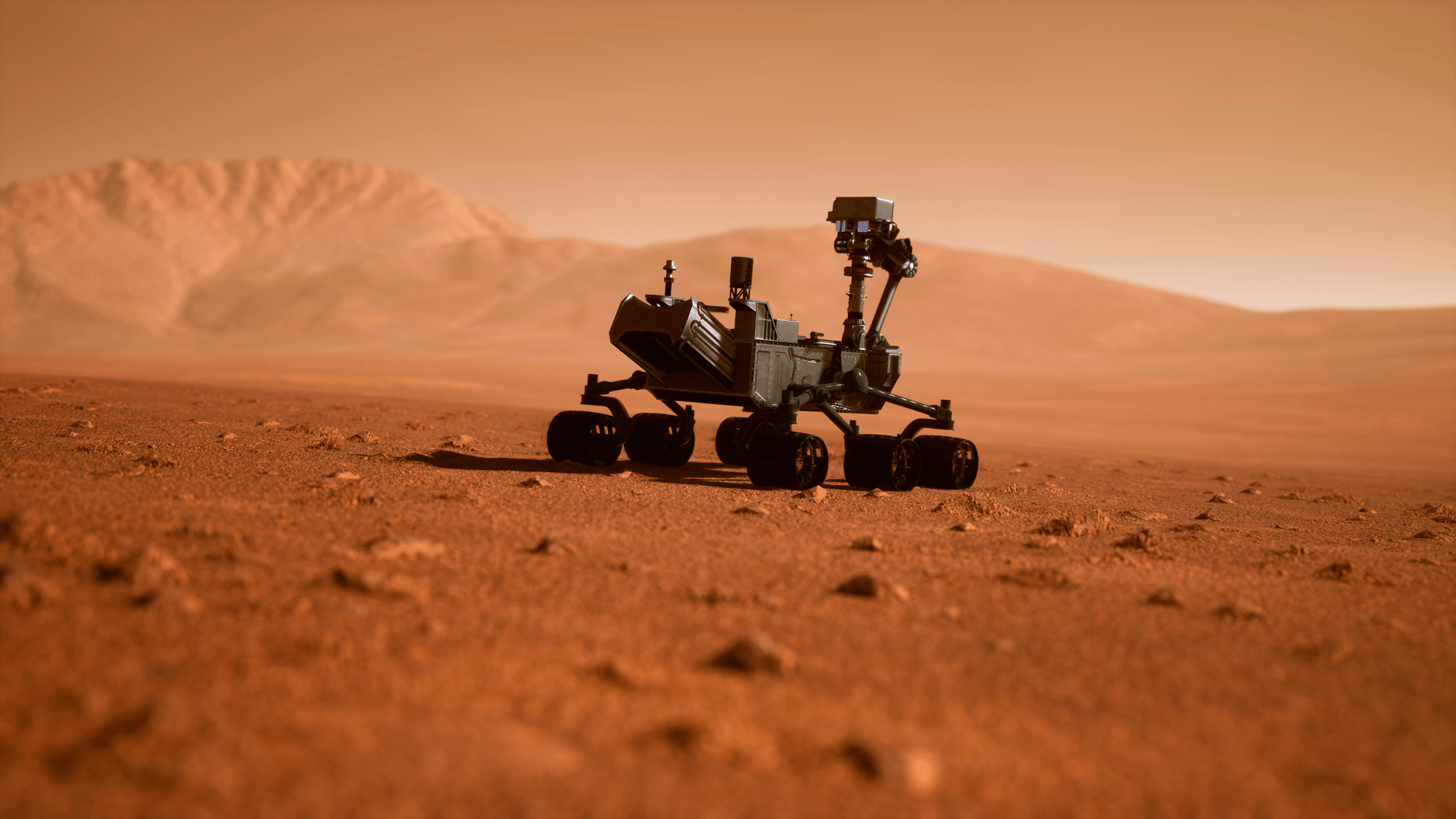
Space
Space engineering requires novel approaches to prove complex concepts and validate methods.
The space challenge
Complexity has always been present in the Space industry. As missions become more ambitious, the need to reduce risk grows.
The introduction of frontier technologies such as advanced robotics and AI or In-Space Manufacturing poses challenges around concept development, verification and validation. Proving technology is going to work as expected in harsh environments is critical.
CFMS works with space organisations to help accelerate the development of frontier technologies through our capabilities in modelling & simulation and robotics & autonomous systems, underpinned by our high performance compute data centre.
How we work in space
Our use cases in Space.
Space is a risky, complex environment. Utilise technologies that help you derisk missions and achieve your objectives. Take a look at our key use cases in the sector. Want to chat about your challenge? Get in touch.
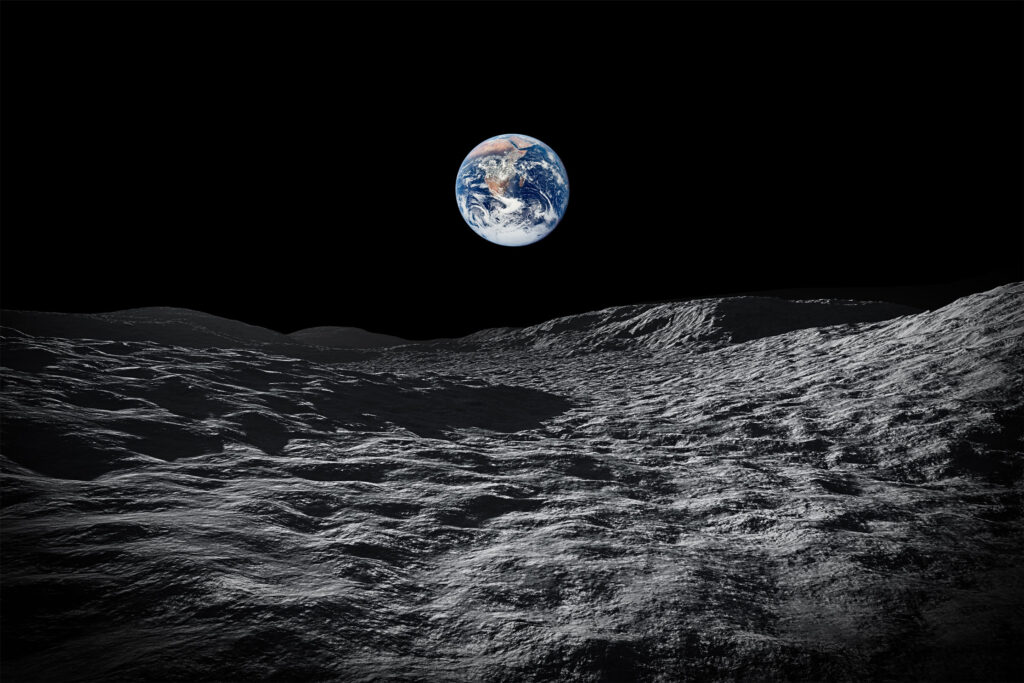
Collaborative Space Data Centre
Utilise customisable high performance compute to address space engineering challenges. A fully-equipped digital workshop for AI, robotics, digital twin enabled concept of operations, development and validation, design for space missions.
Robotics Simulation Environments
Accelerate robotic space mission development using a dedicated AI- enabled platform. We’ve developed a robotics simulator that handles thousands of high-fidelity scenes, including multi-scene and multi-view rendering with AI configuration and processing tools to augment human-centred validation.
Planetary Scale Mapping
Transform years of scientific analysis into automated workflows through discriminate AI deep learning models and high performance compute, enabling planetary scale mapping of geological features.
Impact studies
Space problems we have solved.
Discover how we’ve supported Space organisation reduce complexity and derisk innovation.

Collaborative Space Data Centre for AI, Robotics and ConOps
Exploration
The space market’s needs are poorly addressed by the commercial data centre market, limiting collaboration and prohibiting growth. COSDAC is a full-equipped digital workshop, speeding up development times, increasing collaboration and access to data centre-level hardware and software.
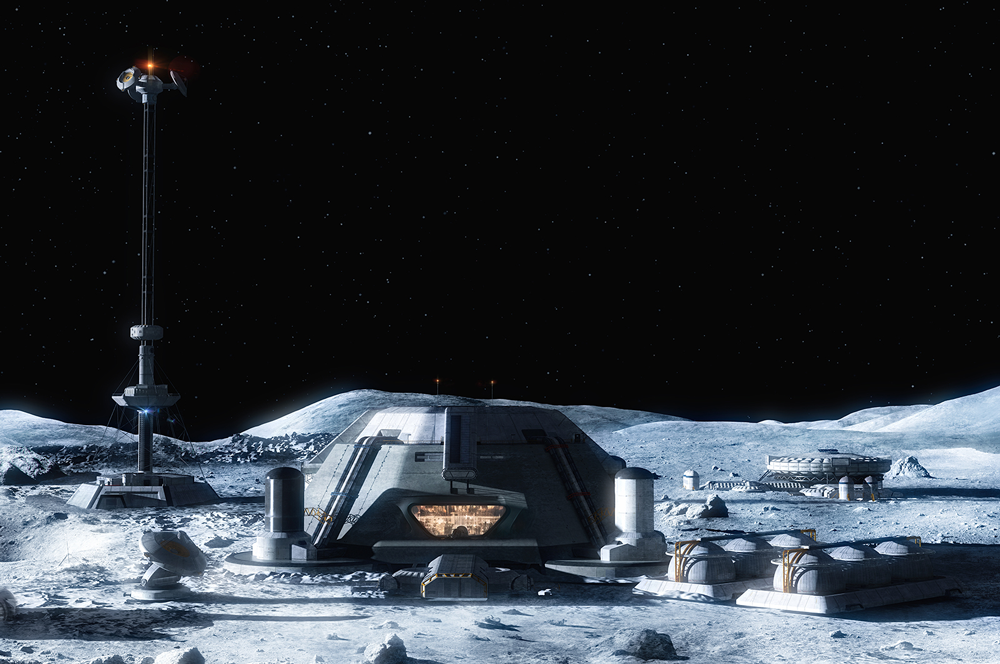
Large AI & Robotics and Space Simulator
Developing robotics applications involves software, simulation, control systems, machine learning, physical testing and a large amount of uncertainty. LARS Sim enables robotic behaviour to explored in a representative virtual environment before moving onto physical testing.
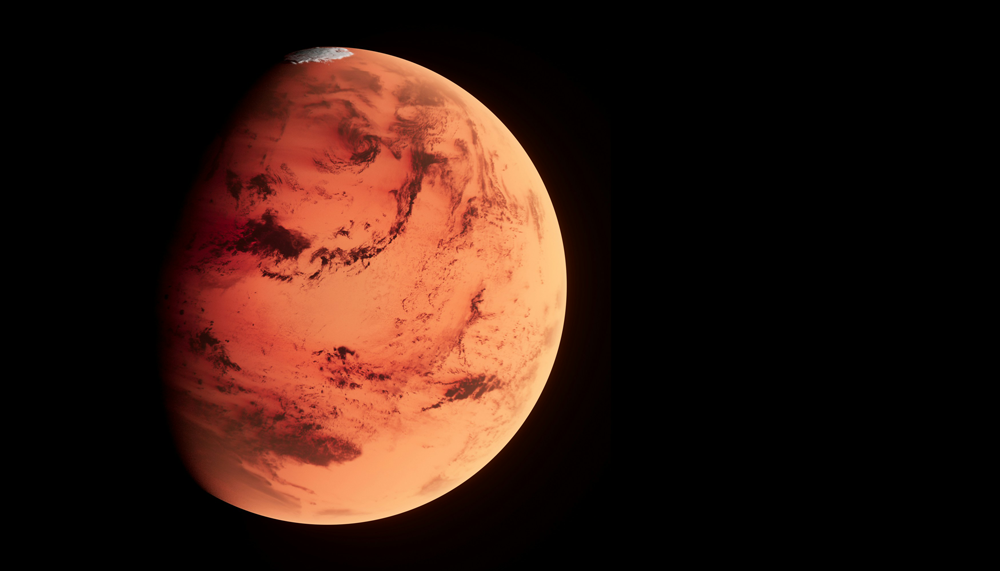
Mapping the surface of Mars with machine learning workflows
Full planetary-scale geological surveys were once simply impossible to complete manually. With machine learning workflows, running on data centre infrastructure, the ability to map the surface of Mars becomes much more achievable.
Why CFMS in space
What CFMS provides that an in-house space team cannot.
We support you with advanced modelling, simulation and robotics capabilities for space missions. We work with your team to understand the challenges faced and act as an extension, complementing your existing skills and capabilities.

Usability
Our tools are designed with the user in mind, ensuring you’re able to use the features without needing extensive training or support.

Compute
We’ve invested in specific compute and hardware designed for space applications. From edge-based deployments and scale concept trade-offs to scene randomisation and the generation of synthetic data for neural networks, the combination of hardware and software enables you to accelerate development.

Frontline Experience
Our robotics and AI compute and simulation tools are a strategic response to decades of field robotics and applied AI experience. This is enhanced by broader leadership in spacecraft and overlapping aerospace simulation for industry. From robots to orbital spacecraft, we have it covered.

Sector thinking
Insights from the space team.
-
Access to Robotics for the South West
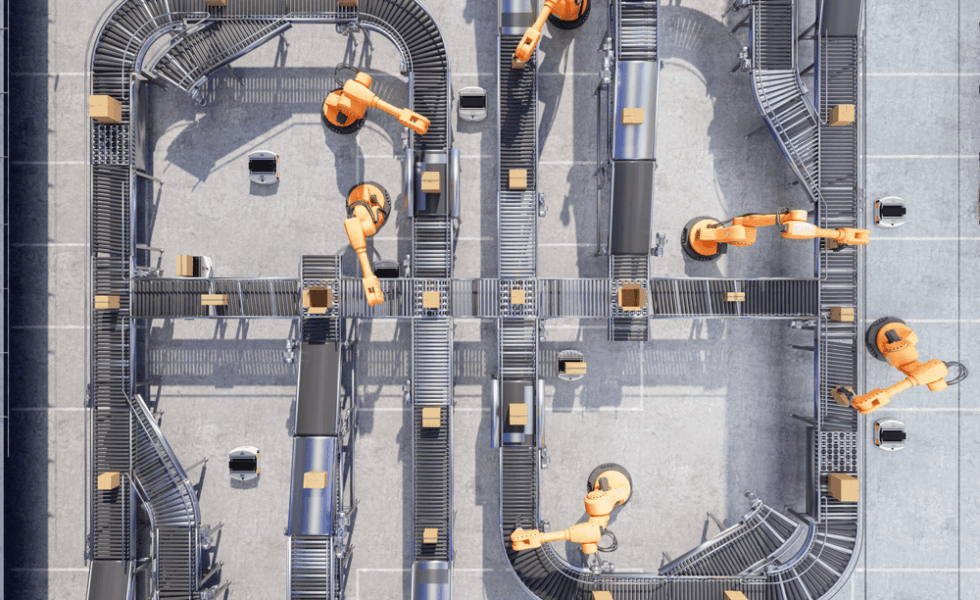
Access to Robotics for the South West
-
Using Uncertainty Quantification to Strengthen Engineering Decisions

Using Uncertainty Quantification to Strengthen Engineering Decisions
-
Design optimisation for silver print heating circuits

Design optimisation for silver print heating circuits
-
There’s always a place for you in engineering – INWED 2026
There’s always a place for you in engineering – INWED 2026
-
Digital Catapult and CFMS Announce Strategic Partnership
Digital Catapult and CFMS Announce Strategic Partnership
Common questions about Space and simulation
Space simulation allows organisation to test concepts, technologies and operational scenarios before deployment. It reduces risk, accelerates innovation and helps decision makers including investors understand the implications of complex strategic and technical choices.
The global space economy is expected to grow $1.8 trillion by 2035. Organisations that can learn, optimise and de-risk fastest will have the decisive advantage. HPC-scale digital engineering enables thousands of mission system and operational scenarios to be explored virtually before committing to capital or programmatic decisions.
Physical AI enabled autonomous systems to perceive, reason and act in the world. In the space sector, this has the potential to transform a wide range of sectors including in-orbit servicing and manufacturing (ISAM) through to commercial lunar exploration and the operation of increasingly congested and sophisticated environments.
Work with CFMS
Tell us about your space challenge.
Whether your programme is at concept stage or you have a specific simulation problem that has already stalled, get in touch.