

Optimising Non-Destructive Inspection Configurations Through Simulation
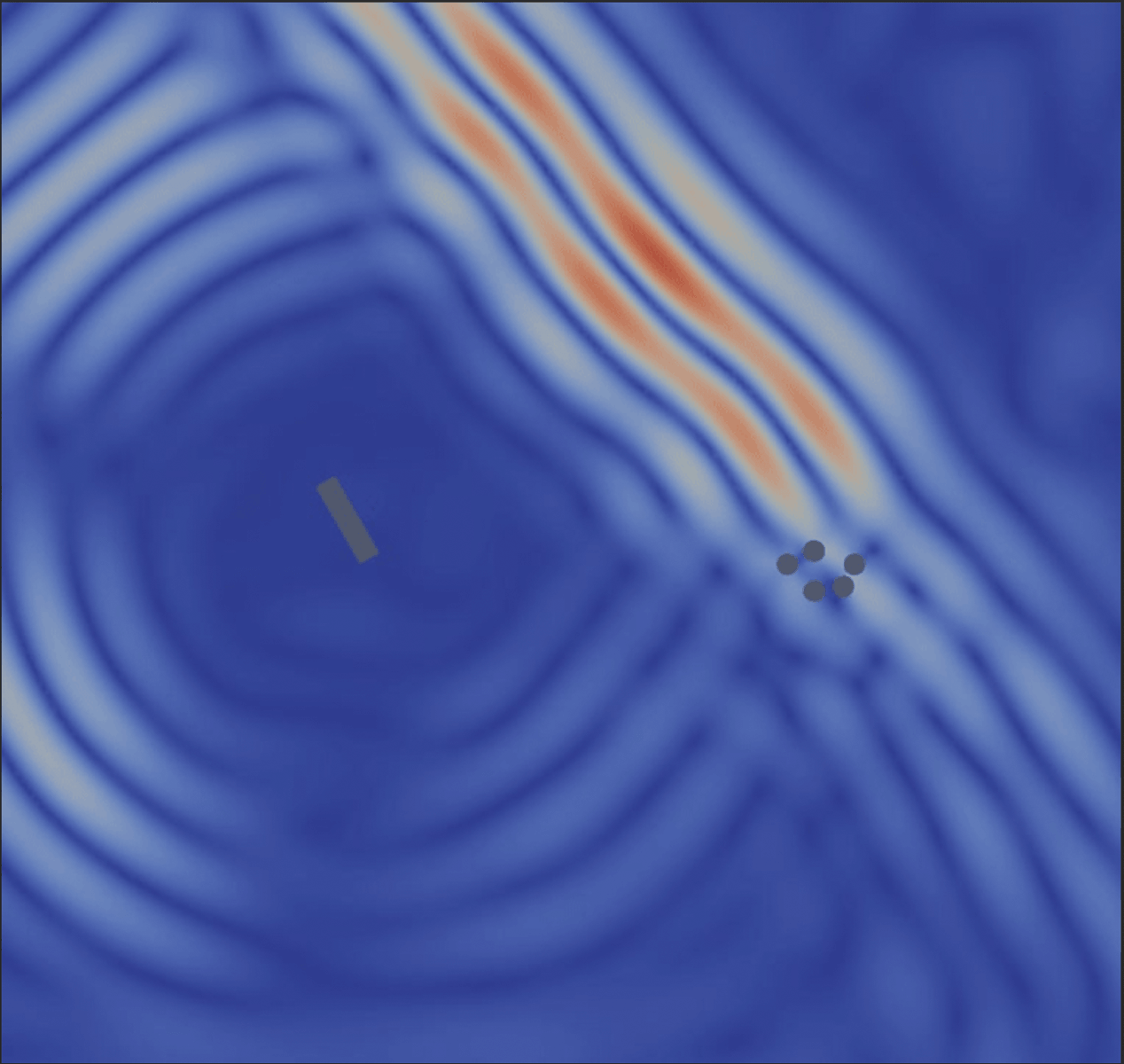
Non-destructive inspection identifies defects in safety critical materials through material analysis and examination techniques. This ensures that structural integrity is maintained. Optimising inspection configurations is challenging as many parameters need to be considered and changed to find the optimum configuration. Simulation can enable lots of potential configurations to be evaluated in tandem, creating more information to support decision-making.
Welding is a fundamental component of fabrication and maintenance in almost every industry, from large scale infrastructure projects to manufacturing, aerospace and construction. It is of critical importance that there is confidence over the quality assurance processes to ensure that the integrity of the weld has not been compromised. While flaws such as inclusion of foreign material or lack of fusion or penetration of the material may not be introduced deliberately, when identified produces significant costs as the material must be removed and the weld redone.
Ultrasonic Inspection and Simulation
Ultrasonic inspection is often the most practical means to assess weld quality; devices are portable, can inspect sub-surface, and can be performed when only a single side of the weld is accessible. There needs to be confidence that the outcome of the inspection will be accurate and that any flaws present have a high probability of detection. To meet this criteria, an NDT technician has a wide range of parameters to optimise, and typically refers to best practice, experience, and any requirements imposed by standards in order to achieve this. The sensitivity of the ultrasonic probe to each type of flaw, has a complex relationship with this range of input parameters. For example, the orientation and location of the flaw with respect to the probe position can change the output, therefore, becoming a complex optimisation problem which can be challenging and costly to address using conventional experimental methods.
Simulation of the inspection system looks to address this challenge as it provides a fine level of control over these parameters, enabling the study of this complex problem to identify patterns that might otherwise go undetected. By building a comprehensive digital model of the physical system, a deeper level of insight can be gained with the inclusion of details that might otherwise not be used. The material or geometrical properties of the component, along with the properties of the probe, such as the frequency and position, will all have an impact on the optimal inspection configuration. To identify this configuration, it is necessary to explore the entire range of each of these parameters. By evaluating hundreds or thousands of individual trials in tandem using simulation, this rapidly yields a higher quantity of information.
The use of simulation has a number of advantages for the business. Primarily, a higher level of confidence can be obtained in the optimal inspection configuration. This means that more flaws are identified at an earlier stage, whilst reducing the number of false calls which might be made. Ultimately, this leads to a greater ability to schedule an intervention and reduce time out of service. By incorporating simulation into the design process, the ability to quickly iterate designs leads to reduced costs as development time is reduced, enabling a mature design to be produced more rapidly. Informed decisions can be made more quickly, relying on the large amount of information which can be gained from the model.
To read more about NDT, visit here.