


Aerospace
Aerospace engineering requires accelerated design and development that standard simulation tools can no longer handle.
The aerospace challenge
New technology and aviation targets are dictating what the future of aircraft looks like.
The aerospace industry is entering a period of significant growth. Strategic areas from ultra-efficient technologies, zero carbon and atmospheric emissions targets through to supply chain resilience and manufacturing productivity are driving innovation. Through next generation aircraft, the UK aerospace sector looks to considerably grow, reaching over four times its current value by 2050. These challenges can be addressed using state-of-the-art digital methods, tools and processes.
CFMS speeds up aerospace engineering processes through advanced mathematical modelling. Through bespoke tooling and scalable high performance compute, you can move more confidently through the product lifecycle, from design to manufacture and onto testing.
How we work in Aerospace
Our use cases in Aerospace.
Aerospace has complexity from design through to manufacturing and test. Discover our key use cases in the sector. Want to discuss your challenge? Get in touch.
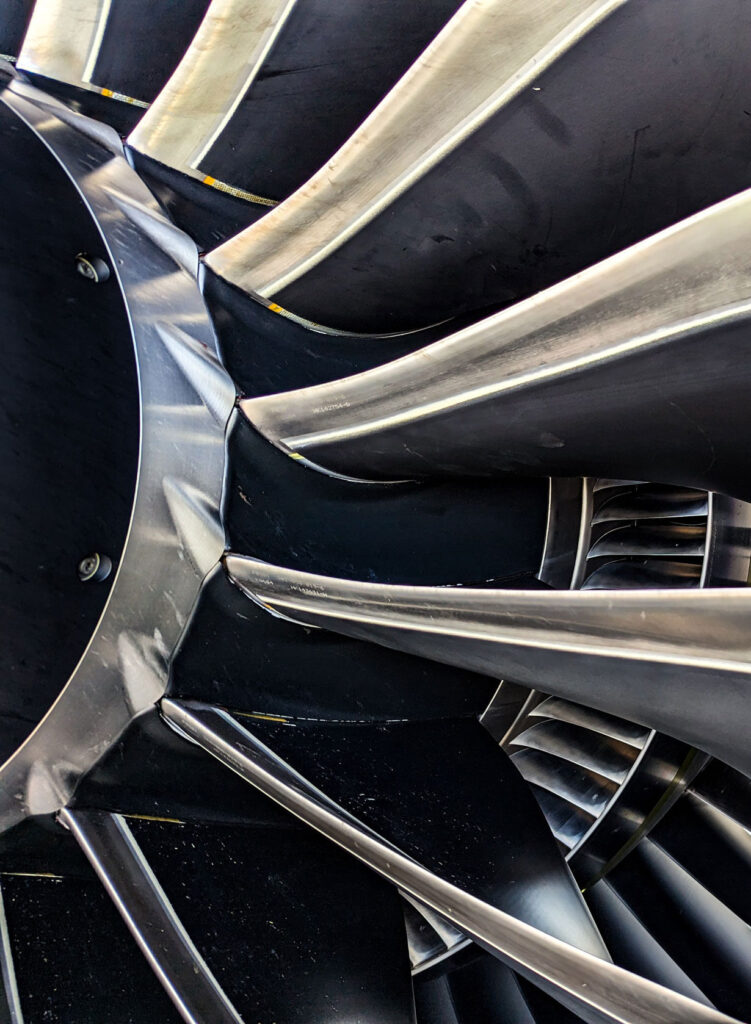
Additive Manufacturing Simulation
Develop and deploy simulations of additive manufacturing techniques for aerospace components. Better understand processes, gain deeper insight into optimal configurations and understand the key drivers of performance and impact of uncertainty.
Smarter testing technique development
Develop and validate novel inspection techniques for identifying and characterising manufacturing and in service defects. Deeply explore these complex challenges, execute many more trials and gain a stronger understanding of problems. Obtain more capable inspections, yielding reduced downtime and less wastage.
Exploring aircraft design spaces
Explore conceptual aircraft architectures through design space exploration techniques coupled with high performance computing and system simulation techniques. Explore larger regions of design spaces rapidly, identify different viable designs and better understand the trade-offs to be made.
Impact studies
Aerospace problems we have solved.
Explore the challenges we’ve solved within the aerospace industry from conceptual design through to manufacturing techniques.
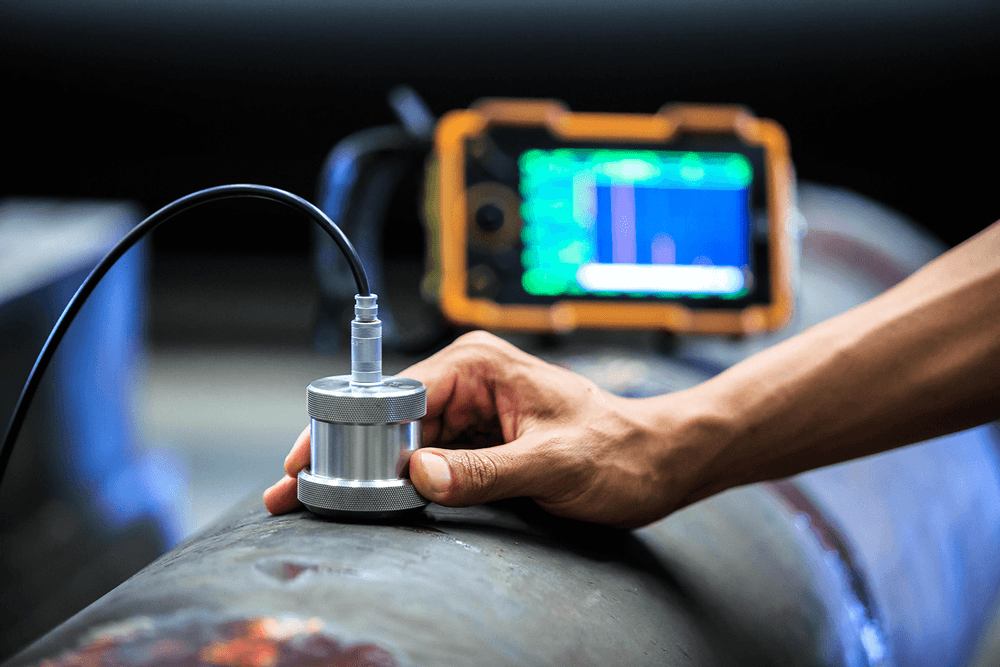
Non-Destructive Testing Development for Safety Critical Components
Traditional NDT development relies heavily on physical testing which is costly and time consuming. We replaced the majority of experimental trials with validated simulation, reducing inspection design and validation costs.
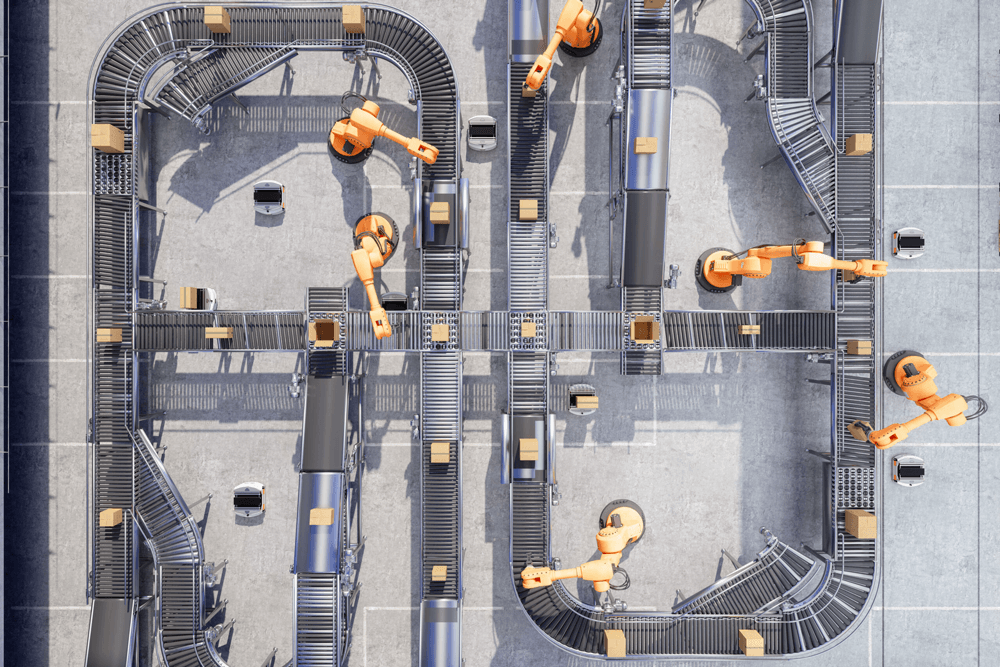
Robotic Inspection for Improved Operator Outcomes
Inspection of large safety critical systems often involve sending a human operator into a dangerous or physically challenging environment. Through developing vision-based inspection techniques that can be applied to robotics, we have helped reduce the risk to human operators whilst retaining their skills in the loop.

Accelerated testing with digital engineering
Collecting data through physical testing is expensive, time intensive and doesn’t yield enough data, slowing down the testing and certification process. There’s a growing need to speed up the testing process with the next generation of single aisle aircraft on the horizon. Through Multiphysics modelling and sensitivity analysis, we analysed the testing set up process and provided insight into factors influencing testing results, supporting better testing processes.
Why CFMS in Aerospace
What CFMS provides that an in-house aerospace team cannot.
Simulation tools enable high-value design to be undertaken and designs validated before manufacturing. We don’t replace your team or these tools, but instead help your team to work faster, do more, and remove the IT restriction that often hinders progress.

Do More
We remove IT restrictions, working with your team to enable them to fail fast, iterate quickly and explore more potential options. Our tools don’t require commercial software licences so you can do more simulations and better understand your challenge.

HPC Scale
Our onsite high performance compute means you can do modelling and simulation at scale without needing your own HPC estate.

Accelerate Development
Expansively explore your design space and consider options that are beyond the normal. Gain an understanding of variability in your system and make better design choices.
Sector thinking
Insights from the aerospace team.
-
Access to Robotics for the South West
Access to Robotics for the South West
-
Using Uncertainty Quantification to Strengthen Engineering Decisions

Using Uncertainty Quantification to Strengthen Engineering Decisions
-
Design optimisation for silver print heating circuits

Design optimisation for silver print heating circuits
-
There’s always a place for you in engineering – INWED 2026
There’s always a place for you in engineering – INWED 2026
-
Digital Catapult and CFMS Announce Strategic Partnership
Digital Catapult and CFMS Announce Strategic Partnership
Common questions about Aerospace
Additive manufacturing is the process of creating 3D objects by depositing materials layer-by-layer. More novel additive manufacturing techniques such as laser metal deposition by wire involve multiple complex physical phenomena that need to be understood before costly prints are made. By simulating the complex interdependent physics involved organisations can better understand the manufacturing process and mitigate risk around wastage and deformations.
Additive manufacturing can be used to create complex geometries that are often expensive to create with traditional machine techniques. It has the potential to change design and manufacturing processes, improving performance and decreasing costs and material wastage.
Instead of manually iterating and testing variations of parameters, design spaces can be explored computationally with more options considered and the whole process automated. Instead of running tens of simulations, through automation and our tool suite, we can run hundreds or thousands of simulations to explore the whole design space more thoroughly, uncovering possibilities that hadn’t been considered before.
Non destructive testing is used in manufacturing to identify defects in safety critical materials through material analysis and examination techniques that do not have an impact on structural integrity. Optimising inspection configurations is challenging as many parameters must be considered and varied to find the optimum configuration. Simulation can enable lots of potential configurations to be evaluated in tandem, supporting decision making.
Work with CFMS
Tell us about your aerospace challenge.
The drive for the next generation of aircraft that support key focus areas is growing. We’re here to support your team to do more, go faster and be bold in aerospace design.